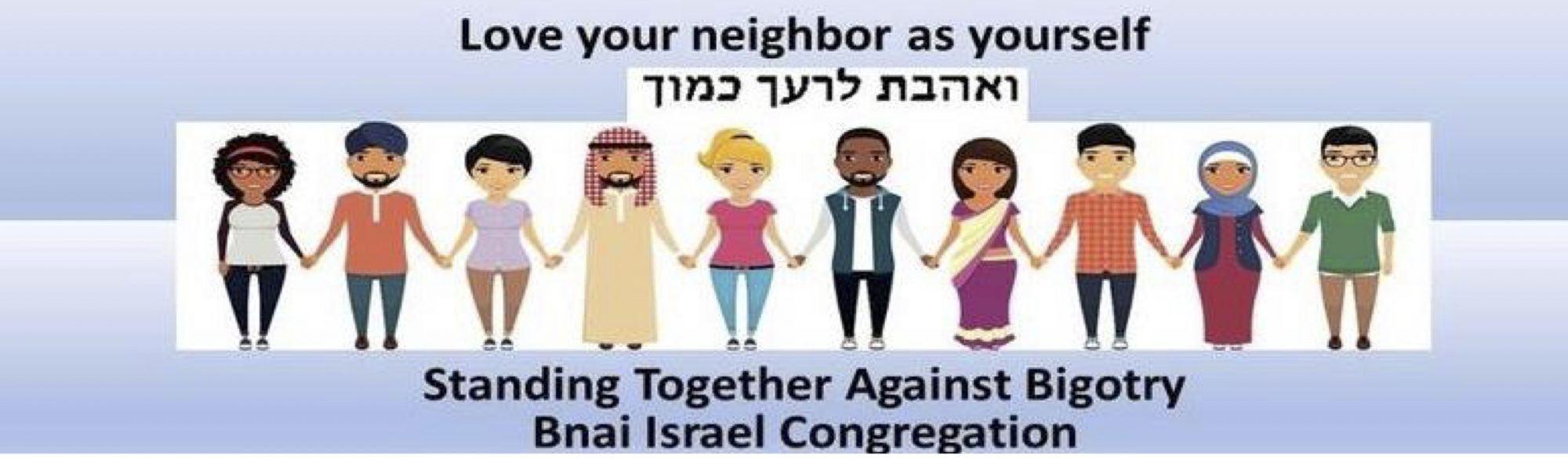
It’s something we’ve heard again and again! The family structure is evolving. Our modern family is more diverse than we have ever seen. According to Pew research, our families are becoming multigenerational again, with grandparents once again living under the same roof as grandchildren. Families are shrinking. Many couples, married or not, and many individuals who are not partnered, consider themselves a complete family.
Parental diversity is common. Many families have a single parent with children. There are also many couples who chose to have children well before marriage, or without the desire to ever be married. We are made up of people from all areas of the gender and sexuality spectrums. We are interracial and multiethnic. We are expanded through fostering and adoption. We are blended together through remarriage or new partnership, allowing for step or half siblings.
Family now a days is simply close-knit unit of individuals joined together without distinction to race/ethnicity, biology, sexual orientation, age, generation, or presence in households.
When I came to visit this congregation back in May, I was asked about how I would be welcoming of the complex family structures that are now streaming this service. How would I welcome young families and old families. How would I welcome interfaith families.
I turn to our readings today from both the Torah and Haftarah to answer those questions as these are exactly the kinds of families we saw today in our sacred texts. The “first family”, that is the Abraham, Sarah, and their miracle child Isaac is far from traditional.
In the text that comes right before our Torah portion today, Abraham, who is already an old man, cries out to God in sorrow for not being able to have an heir and asks that his servant Eliezer get his inheritance.
He says: וְהִנֵּ֥ה בֶן־בֵּיתִ֖י יוֹרֵ֥שׁ אֹתִֽי. A member of my household is going to be my heir.
Chizkuni, 13th century french commentator, points out that since Abraham has no biological heir, this servant who is like a son to him will have to be the one who takes care of Abraham’s affairs when he dies. Although Eliezer becoming the head of the family is not the final outcome, this story strongly hints at the possibility of Biblical adoption. Despite blood ties, Abraham has a strong covenantal bond to his servant and the desire to form a familial bond.
God reminds Abraham that he will have a biological child to be his inheritor, but to share his love for Eliezer one last time, Chizkuni comments that Eliezer will take this child under his wing and teach it everything he knows.
But having a biological child is not so simple for Sarah and Abraham. Sarah, an old woman now herself, has struggled her entire life with infertility. But she desperately wants a child by any means. When Sarah gives her servant Hagar to her husband, she does at first have every intention to have her family this way.
She says, אוּלַ֥י אִבָּנֶ֖ה מִמֶּ֑נָּה, perhaps I will be built up and have a son through her.
Radak, 12th century french commentator says with those words she claims that any son from this union with her husband would be accepted by her as if he were part of her biological family. She would treat him as her own son.
According to Biblical law, the children of concubines do not have the status as slaves as they did in surrounding civilizations at the time. Instead, their offspring have the same status as their siblings through the wife. The children of a concubine, according to Biblical law, are considered the children of the original couple. So we have in Hagar the Biblical roots of having children through surrogacy.
Not only this, but we know that Hagar was an Egyptian, and Abraham was Mesopotamian. These two proud civilizations had their unique cultures and languages. The union of Abraham and Hagar was also multi-ethnic. After Hagar and Ishmael are banished due to Sarah’s jealousy, Sarah and Abraham try for a child together one last time. Our Torah reading today opened with a wonderfully ambiguous verb, pakad, which can mean ‘took note of”, “visited,” “remembered,” or “fulfilled a promise.”
Genesis 21:1 says, “Adonai pakad Sarah as was promised; thus did Adonai as was spoken.” After that, she had her son, Isaac.
According to the Jewish Daily Forwards’s Philologos column, pakad have another meaning. A repeated motif in the bible is that of the woman who is unable to conceive until there is divine intervention on her behalf, after which she gives birth to a son who grows to be a spiritual hero. Furthermore, the Hebrew word used for God’s intervention in such cases is pakad, which in the post-biblical hebrew of the early Christian era even had the occasional sense of “had intercourse with.”
While no one is arguing that God is the father of Isaac by any stretch of the imagination, I do not think the post-biblical translation is a stretch. It is actually a less imaginative way to describe how God is intervening in this fertility crisis. God is an infertility specialist who is the inventor of assisted reproductive technology.
Our Haftarah also tells of a woman Hannah who was able to give birth to 6 children thanks to the intervention of God. But her story doesn’t start there. The book of Samuel begins with the story of a blended family. Elkanah had two wives, Peninah and Hannah. Peninah was able to have children and Hannah had none. In essence, Hannah was a step parent to Peninah’s children.
Before Hannah goes to the Temple to pray for a miracle child, we see a glimpse into the love her husband has for her. Elkanah says to her, הֲל֤וֹא אָֽנֹכִי֙ ט֣וֹב לָ֔ךְ מֵעֲשָׂרָ֖ה בָּנִֽים, Am I not more devoted to you than 10 sons. Or as 11th century french commentator Rashi translates, do I not love you more dearly than the 10 sons that Peninah has bore me?
Here we see a complete family unit of just two, without the inclusion of children. And while Hannah does ultimately want children, Elkanah is content just having Hannah as his wife.
Our readings today were rich with multiple blueprints for family structures. According to Rabbi Josha Lesser, if we emphasized the humanity and complexity of our jewish families, perhaps more jews would feel less shame and discomfort over the complexities of their own families. We must highlight the different ways that our ancestors tried to create families rather than project a reading of normalcy that the text does not bear out. Ironically, then, a literalist reading of the bible gives us artificial insemination, surrogacy, multiethnic adoption, and other routes to finding complex family formations. In the bible, the nuclear family is an alternative family.
I return to the questions I was asked in May–how will I welcome the complex family structures sitting on their couches and streaming this service. I will welcome them as God did, by affirming all of our families as sacred, covenantal, and divine.
This year I am reworking the hebrew school to allow for more individualized lessons to cater to our young families and help them connect to this congregation and the greater Jewish world. I am creating multiple avenues for our adults to connect to their Judaism, both through Jewish education and social programming.
Our non-Jewish partners who have always been an integral part of this congregation will soon officially have status as members of the synagogue. I will continue to work with our interfaith families to affirm and celebrate them throughout the lifespan. I will also continue to use my position as a rabbinical assembly member to work within the conservative movement for more ways to embrace interfaith couples in every possible way.
The modern family looks very much like the ancient family if you look close enough. God blessed them and gave them a permanent seat of honor in our sacred text.
All of our families are sacred. Let’s strive to continue to make Bnai Israel Congregation a safe haven and spiritual home for all family structures.
Lshana Tova umetukah, a sweet new year filled with new possibilities and new families.
 Rabbi Chaya Bender